

Berberine: A Complete Guide — Benefits, Dosage, Precautions
Berberine has become one of the most talked-about compounds in metabolic wellbeing. It shows up in conversations about blood-sugar balance, about energy, and sometimes in overstated comparisons with prescription drugs. Some of the enthusiasm is justified by research. Some of it deserves tempering.
This guide gathers what we actually know about berberine, on the evidence: where it comes from, how it works at the cellular level, what clinical studies show, how it's typically taken and — just as importantly — who should avoid it or speak to a doctor first. It isn't a sales pitch and it promises nothing. It's the informed starting point you need before any decision.
What berberine is and where it comes from
Berberine is a yellow plant alkaloid found in several plants used for centuries in traditional medicine, including Berberis (barberry), Coptis chinensis (Chinese goldthread) and Hydrastis canadensis (goldenseal). In practical terms, it's the active compound that modern research isolated and studied from a range of plants historically used for digestive complaints and infections.
What moved berberine out of the “traditional remedy” category and into “rigorously studied compound” was the discovery, over the past two decades, of how it interacts with the cell's energy metabolism. That's where most of today's research is focused.
How berberine works: the AMPK enzyme, explained simply
Almost any serious discussion of berberine arrives at four letters: AMPK.
AMPK (AMP-activated protein kinase) is easiest to understand as a kind of “energy-saving switch” in the cell. When the cell's energy reserves run low, AMPK activates and shifts metabolism from storage toward use: it increases glucose uptake from the blood, stimulates the burning of fatty acids, and slows down processes that consume energy needlessly.
Exercise and fasting naturally activate AMPK. Research shows that berberine activates the same enzyme through a biochemical route, which explains why its observed effects in studies land in exactly the areas AMPK regulates: glucose and lipid metabolism.
The analogy is useful, but so is its limit: berberine influences a regulatory mechanism. It is not a button that “resets” your metabolism, and it does not replace the fundamentals — diet, movement, sleep.
What the clinical studies show
Here it's worth clearly separating what is well documented from what remains preliminary.
Glucose metabolism. The most consistent area of research concerns berberine's effect on blood sugar. Several clinical trials and meta-analyses have observed reductions in fasting glucose and glycated haemoglobin (HbA1c) in people with metabolic dysregulation, with effects that in some analyses were comparable in magnitude to certain standard pharmacological interventions. One point matters a great deal here: these studies were run on populations with diagnosed metabolic disorders, under monitoring — not on healthy people looking for “prevention.”
Lipid profile. Some studies have also reported improvements in total cholesterol, LDL and triglycerides. The results are promising but heterogeneous across studies.
Other directions. There is ongoing research into gut microbiota, inflammation and polycystic ovary syndrome (PCOS), but these areas are still more preliminary and don't yet support firm conclusions.
The general limits of the literature: many studies have small samples, short duration and were conducted predominantly on Asian populations, which makes generalisation cautious. The research is enough to take berberine seriously, but not enough for categorical claims.
An honest note on “natural berberine vs. Ozempic.” You'll frequently meet this comparison online. It's misleading. Berberine and GLP-1 medications act through entirely different mechanisms, have different levels of evidence, and are not interchangeable. Berberine is not a drug and shouldn't be treated as a substitute for a prescribed treatment. If you have a metabolic condition, the right conversation is with your doctor, not with an article.
Dosage: what the studies used
The doses found in the clinical literature commonly sit around 900–1,500 mg per day, split into 2–3 servings, usually taken with meals. The splitting has a practical rationale: berberine has a relatively short half-life, and taking it with food tends to reduce digestive discomfort.
A few principles you'll find consistently across sources:
- Start gradually. A gradual introduction reduces the likelihood of digestive effects.
- Take it with food, not on an empty stomach.
- Quality and declared dose matter. A plant compound only works if the product actually contains the amount stated on the label, verifiably. Here, manufacturer transparency — clearly declared doses and independent batch testing — is what separates a serious supplement from one whose contents you can't be sure of.
This article doesn't recommend a personal dose for you. The right dose depends on your medical context and on other supplements or medications you take — and it's set with a professional.
What berberine is often combined with
In formulations focused on metabolic balance, berberine often appears alongside ingredients that act complementarily:
- Chromium — a trace element with an authorised EU health claim: chromium contributes to the maintenance of normal blood glucose levels and to normal macronutrient metabolism.
- Cinnamon extract and green tea extract — frequently used in nutritional approaches oriented toward metabolism.
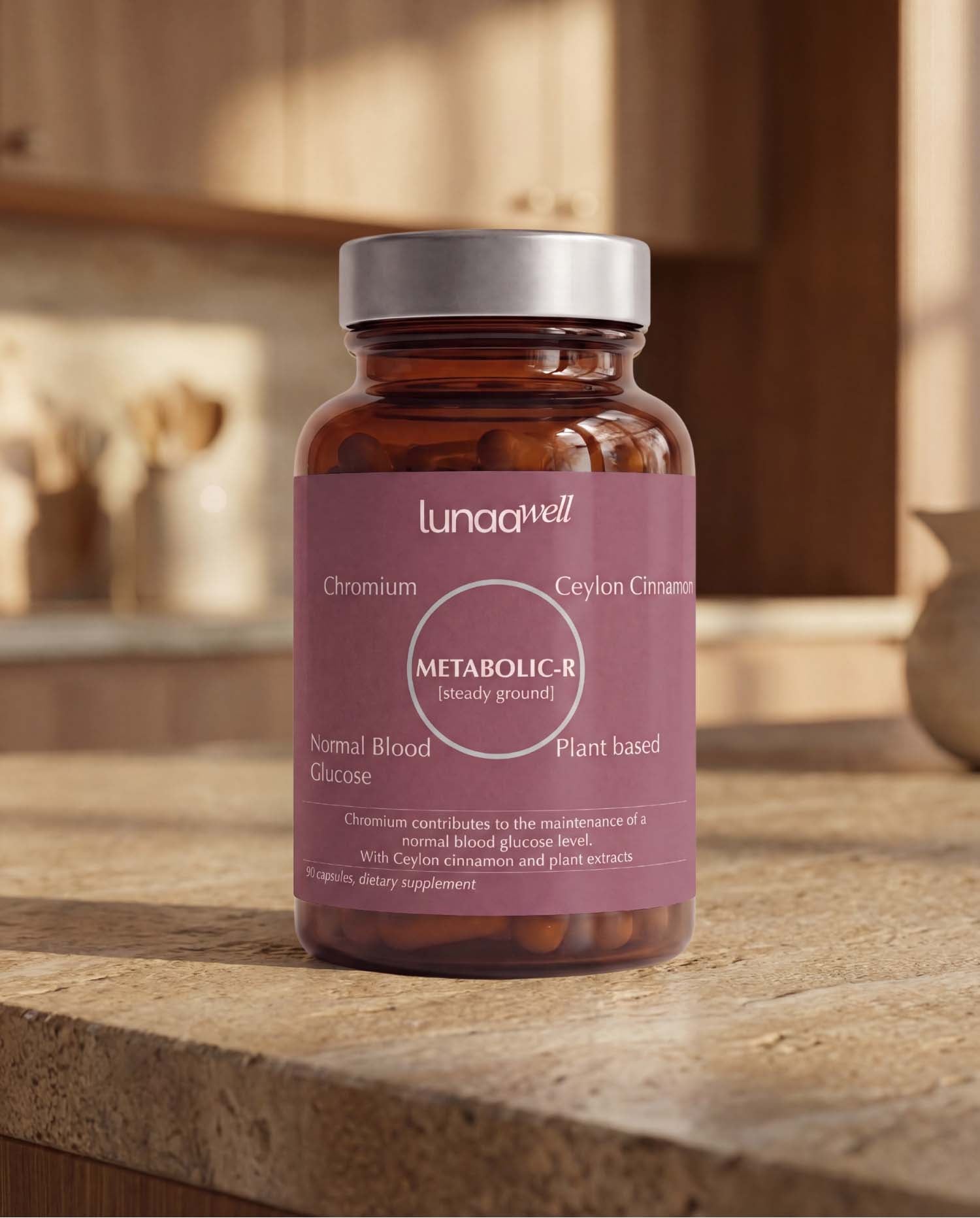
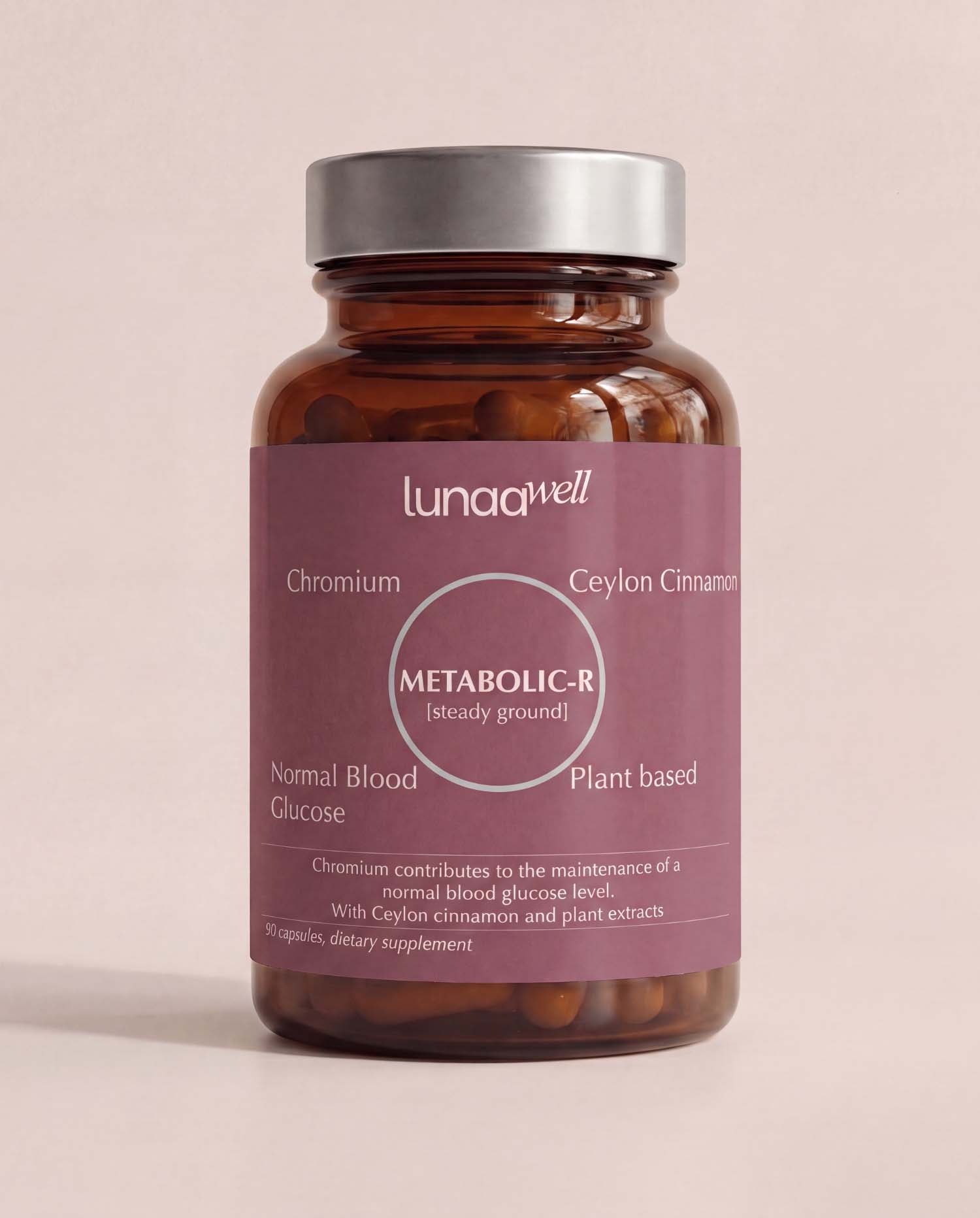
In the Lunaawell range, this combining logic underpins METABOLIC-R — a formula combining berberine, cinnamon extract, green tea extract and chromium, with declared doses and independent batch testing. For broader context, you can also read our guide to insulin resistance and our article on natural approaches to GLP-1.
Precautions, contraindications and interactions
This is the part the enthusiastic articles skip. Don't skip it.
- Pregnancy and breastfeeding: berberine should not be used. There is evidence of risk to the newborn (it can cross the placenta). A clear contraindication.
- Infants and young children: avoid.
- Drug interactions: berberine affects liver enzymes (cytochrome P450) involved in metabolising many medications and can alter their blood levels. Take particular care if you take anticoagulants, immunosuppressants, certain heart medications or blood-sugar medication (additive effect → risk of hypoglycaemia).
- Common side effects: predominantly digestive — abdominal discomfort, diarrhoea or constipation, especially early on and at high doses.
- Liver or kidney conditions: speak to your doctor first.
The simple rule: if you take any chronic medication or have a diagnosed condition, berberine is not a decision to make on your own.
Frequently asked questions
How long until you see effects?
Studies reporting metabolic changes generally ran for several weeks to several months. Berberine has no perceptible “immediate” effect; the effects observed in research are measured on lab tests, over time.
Does berberine help with weight loss?
It is not a weight-loss product and cannot be presented as one. Some studies observed metabolic and body-weight changes in the context of metabolic disorders, but berberine does not replace diet, movement and sleep, which remain the determining factors. Any message presenting it as a “weight-loss pill” ignores both the evidence and the regulations.
Can it be taken long term?
Most studies were short and medium term. For prolonged use there isn't enough very-long-term safety data — one more reason for medical supervision.
When should it be taken, morning or evening?
Usually split across the main meals. The exact timing matters less than consistency and taking it with food.
Are berberine and metformin the same thing?
No. They have partly overlapping mechanisms (both influence AMPK), but they are different substances with different status — one is a medication, the other a supplement — and they don't substitute for each other. Combining them without a doctor's advice can cause hypoglycaemia.
Why quality and declared doses matter
Berberine is a good example of a principle that applies to any supplement: the molecule may be well studied, but if the product in front of you doesn't actually contain the stated dose, or contains impurities, the research becomes irrelevant to you.
A supplement you can trust means: a clearly declared dose on the label, a formulation without needless fillers, and independent batch testing that confirms what's inside. That's exactly the standard we hold at Lunaawell.
This article is for informational and educational purposes. It does not constitute medical advice and does not replace consultation with a doctor or pharmacist. Food supplements are not a substitute for a varied, balanced diet and a healthy lifestyle. If you have a condition, are undergoing treatment, or are pregnant or breastfeeding, consult your doctor before using any supplement.
Read more

Chronic cortisol in women: 7 signs, the connection with abdominal fat, and the AM-PM protocol with magnesium, holy basil, and lifestyle rituals for reset.

Why your metabolism changes at menopause, why old diets stop working, and the four pillars that make the difference. An empathetic, science-based guide.