

Liposomal vs. Regular Vitamin C: What's the Real Difference?
You find vitamin C on every shelf — tablets, effervescent powders, capsules — and, increasingly, a version called “liposomal,” usually more expensive. Is the price difference worth it, or is it just marketing? The short answer: there's real logic behind it, but also plenty of marketing that overstates it. Let's separate the two.
The problem no one tells you about regular vitamin C
Vitamin C (ascorbic acid) is water-soluble, and the body has a limit to how much it can absorb at once. Its absorption in the gut happens through specialised “transporters,” and these become saturated. When you take a large dose of regular vitamin C, a significant part simply isn't absorbed — it passes on and is eliminated. At very high doses, the unabsorbed surplus can draw water into the intestine and cause digestive discomfort or diarrhoea.
In other words: beyond a certain threshold, “more” regular vitamin C doesn't necessarily mean “more vitamin C in your body.” This is the problem the liposomal form tries to solve.
What “liposomal” actually means
Picture vitamin C packaged inside microscopic bubbles made from the same kind of fats your cell membranes are built from (phospholipids). These bubbles are called liposomes.
The simplest analogy: it's like sending a fragile package not loose through the post, but inside a shipping box designed to travel safely along the way. The lipid shell protects the vitamin C on its journey through the digestive system and, because it's “friendly” with cell membranes, it can ease absorption through routes that don't depend so heavily on the transporters that saturate.
The intended result: more vitamin C actually reaches the bloodstream, with less digestive discomfort at higher doses.
What the studies show — evenly
Here it's important to be honest, because the marketing around liposomes tends toward exaggeration.
What is reasonably supported: several bioavailability studies have observed that liposomal forms can lead to higher plasma concentrations of vitamin C compared with unencapsulated forms, particularly at higher doses, where regular absorption hits its ceiling.
What deserves tempering: the size of this advantage varies between studies, depends greatly on the real quality of the liposomes in the product, and the research is more limited in scale than the ads suggest. “Absorption several times higher” is the kind of claim you should view sceptically if it comes without context.
And a point of common sense: if your vitamin C level is already adequate from a diet rich in vegetables and fruit, a boost in absorption offers a marginal benefit. The liposomal difference matters most where you want higher, better-tolerated doses.
One thing stays the same regardless of form: in the EU, vitamin C carries clear authorised health claims — it contributes to the normal function of the immune system and to the protection of cells from oxidative stress, among others. The liposomal form targets how much reaches the body; it doesn't change what vitamin C does once it's there.
How to spot a genuine liposomal product
“Liposomal” has become a marketing word, and not every product carrying it contains real, well-formed liposomes. A few markers:
- Real, declared phospholipids (usually from sunflower or soy lecithin) — the material liposomes are built from. Their absence from the label is a red flag.
- A clearly declared vitamin C dose, not hidden inside a “proprietary blend” with no amounts.
- Transparency about the form and, ideally, testing — a serious manufacturer tells you what's inside and confirms it through analysis.
- Caution around “miracle” promises. A good product describes the mechanism accurately; it doesn't sell cures.
When the upgrade is actually worth it
Liposomal vitamin C makes the most sense if:
- you want a higher dose, but regular vitamin C causes you digestive discomfort;
- you're looking for better tolerability for sustained supplementation, for example through the cold season;
- you value absorption and are willing to pay the difference for it.
It isn't necessarily worth it if you take a small, occasional dose — there, a quality regular vitamin C does the job at a lower cost.
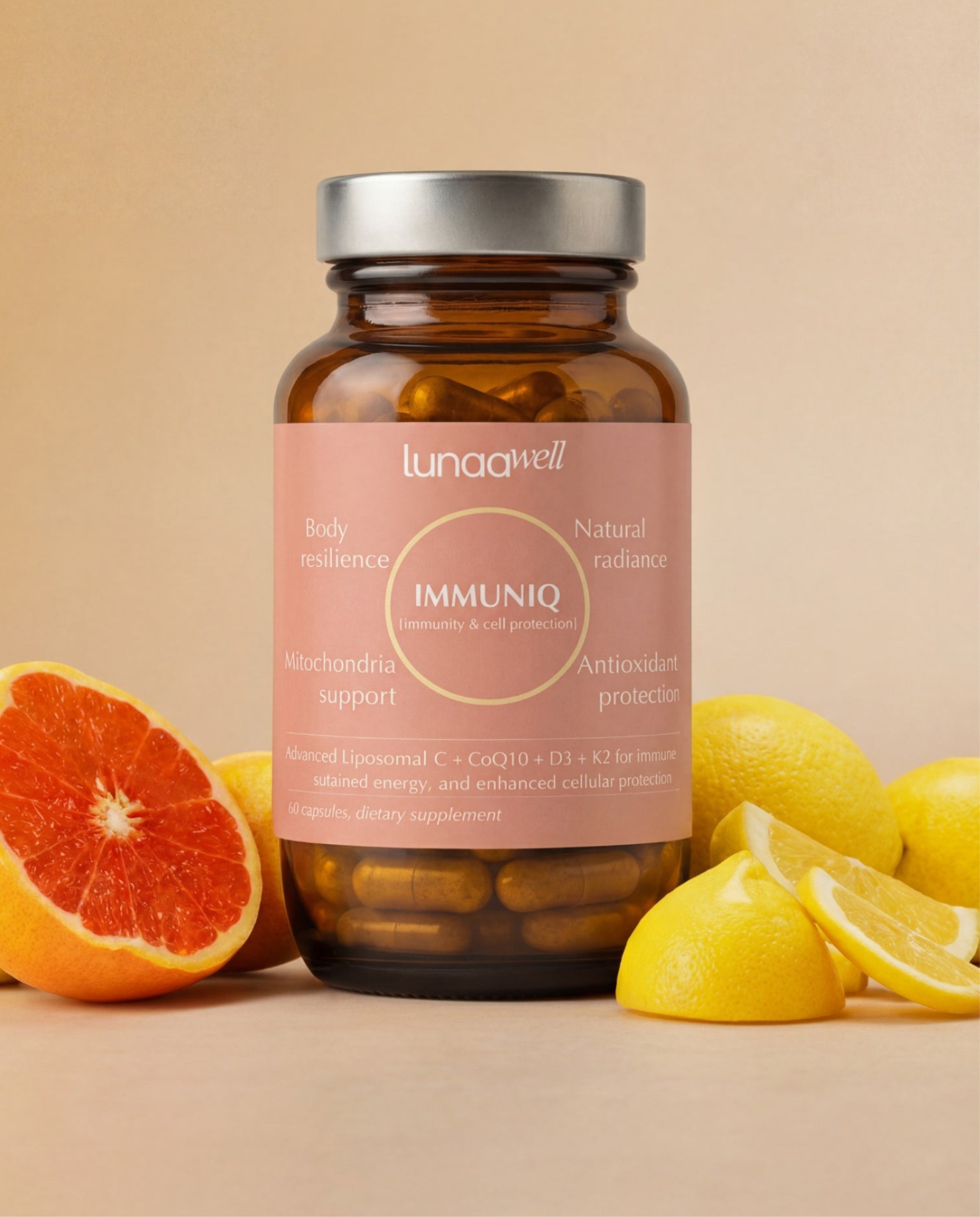
In the Lunaawell range, the liposomal form is built into IMMUNIQ, designed to support the normal function of the immune system, with declared doses and independent batch testing.
Frequently asked questions
Does liposomal vitamin C really absorb better?
Bioavailability studies suggest it can reach higher plasma concentrations than the regular form, especially at high doses. The magnitude varies and depends on product quality.
Does it have side effects?
It's generally well tolerated and tends to cause less digestive discomfort than high doses of regular vitamin C. As with any supplement, respect the recommended dose.
When should it be taken?
It can be taken at any time of day; some prefer the morning. Consistency matters more than the exact timing.
Is it worth the higher price?
It depends on your goal. For high doses and better tolerability, yes. For small, occasional supplementation, a quality regular vitamin C is enough.
This article is for informational and educational purposes. It does not constitute medical advice. Food supplements are not a substitute for a varied, balanced diet and a healthy lifestyle. Respect the manufacturer's recommended daily dose.