
GLP-1 natural: cum stimulezi hormonul sațietății fără injecții (ghid 2026)
Citeai despre Ozempic prima dată acum doi ani. Acum o cunoști pe vecina care îl folosește, prietena care s-a dus la endocrinolog să-l ceară și fata de la sală care îți spune că „a topit kilogramele". Ce nu îți spune nimeni: corpul tău produce deja propria versiune a hormonului pe care medicamentul îl mimează. Se numește GLP-1, e natural, și după 35 de ani începe să scadă.
Ce este GLP-1 și de ce vorbește toată lumea despre el
GLP-1 (Glucagon-Like Peptide-1) este un hormon pe care intestinul subțire îl eliberează când mănânci. Are trei funcții esențiale pentru metabolism:
- Semnalează creierului că ești sătulă — încetinește pofta de mâncare
- Încetinește golirea stomacului, prelungind senzația de plenitudine
- Stimulează pancreasul să elibereze insulină exact când e nevoie, fără spike-uri glicemice
Medicamente precum Ozempic, Wegovy sau Mounjaro sunt agoniști GLP-1: molecule sintetice care se leagă de aceiași receptori și amplifică artificial semnalul. Funcționează — dar la un cost: efecte adverse digestive (greață, diaree, gastropareză), preț ridicat, dependență de injecție săptămânală și efectul de rebound când oprești tratamentul.
Vestea bună: poți stimula GLP-1 natural, prin alegeri zilnice care lucrează cu biologia ta, nu împotriva ei.
De ce scade GLP-1 după 35 de ani
Pe măsură ce înaintezi spre perimenopauză, mai mulți factori se combină pentru a reduce producția naturală de GLP-1:
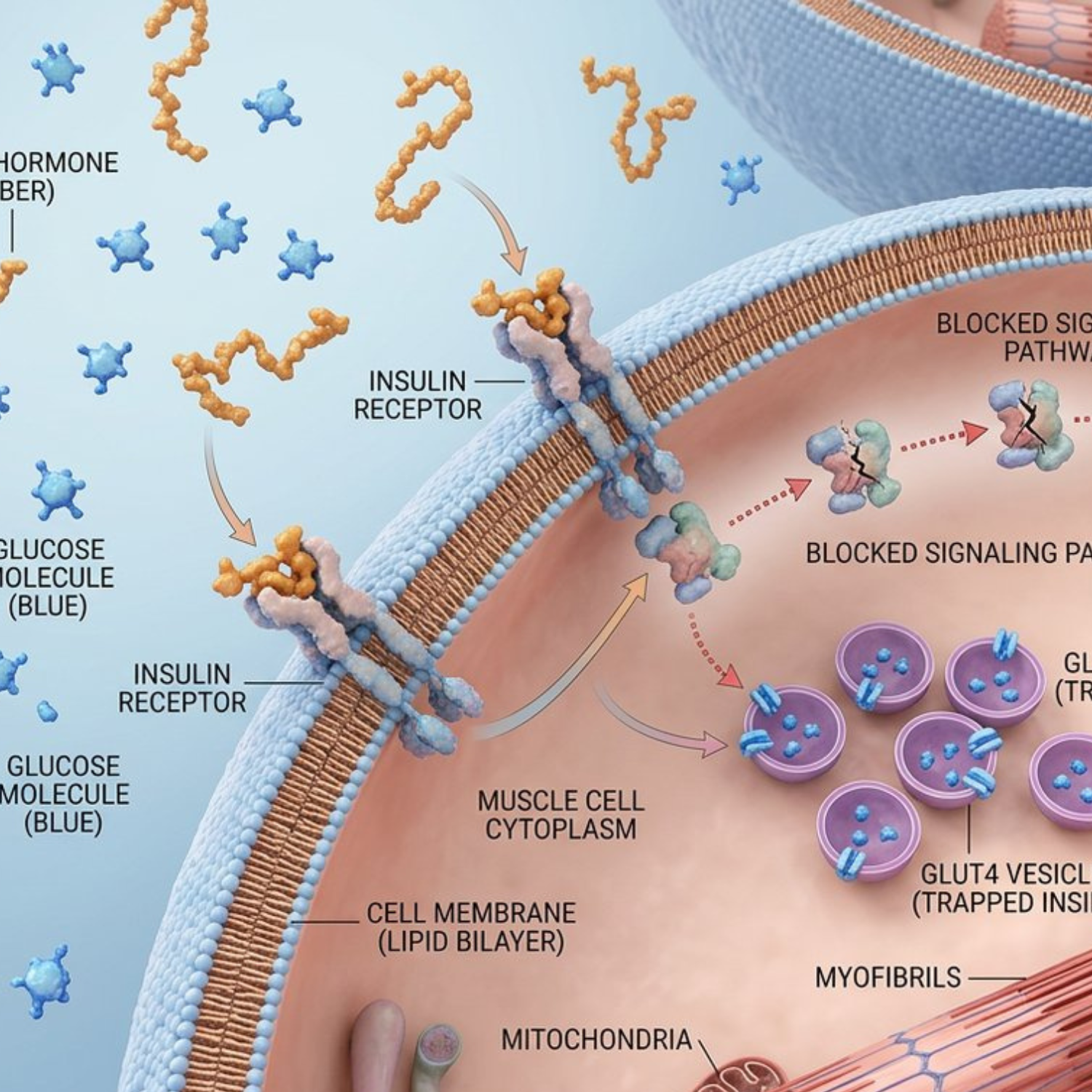
- Sensibilitatea la insulină scade — celulele răspund mai lent la hormoni, inclusiv la cei intestinali.
- Microbiomul intestinal se modifică — fluctuațiile estrogenului afectează bacteriile care produc acizi grași cu lanț scurt (SCFA), un stimulent direct al GLP-1.
- Inflamația cronică crește — interferează cu semnalizarea hormonală post-prandială.
- Mesele devin mai sărace în proteină și fibre — exact macronutrienții care declanșează GLP-1.
Rezultatul: foame mai accentuată între mese, „food noise" — gândul constant la mâncare —, acumulare de grăsime abdominală și senzația că orice mâncai înainte cu rezultate fine acum „se lipește". Nu e în capul tău. E biochimie.
Cele 5 strategii naturale care cresc GLP-1
1. Proteină la fiecare masă — în special dimineața
Proteina este cel mai puternic stimulent natural al GLP-1. Cercetările arată că o masă cu 25-30g proteină crește GLP-1 de 2-3 ori mai mult decât o masă cu același număr de calorii dominată de carbohidrați rafinați.
Pentru femei după 35, ținta zilnică ideală este 1.2-1.6g proteină per kg de greutate corporală. Asta înseamnă pentru o femeie de 65kg → 80-105g proteină pe zi, distribuită în 3-4 mese.
Sursele cu cel mai mare impact asupra GLP-1 sunt cele cu spectru complet de aminoacizi: zer (whey), proteine vegetale combinate (mazăre + orez), pește, ouă, leguminoase. Plant Protein de la Lunaawell este formulat exact pentru această fereastră de viață, cu profil complet de aminoacizi din mazăre, orez integral și semințe de cânepă — fără îndulcitori artificiali și optimizat pentru sațietate, nu doar masă musculară.
2. Fibre solubile fermentabile
Când fibrele solubile (psyllium, beta-glucani din ovăz, pectină din mere, inulină din cicoare) ajung în colon, sunt fermentate de bacteriile bune în acizi grași cu lanț scurt — butirat, propionat și acetat. Aceștia activează direct celulele L din intestin, care produc GLP-1.
Ținta: 25-35g fibre pe zi, din care minim 7-10g solubile. Practic: o lingură de psyllium dimineața + un castron de ovăz integral + 2 porții de leguminoase pe săptămână + fructe cu pulpă.
3. Polifenoli — curcumina, EGCG, resveratrol
Polifenolii din alimente colorate (afine, ceai verde, turmeric, struguri negri, cacao crud) cresc nu doar GLP-1, ci și sensibilitatea celulelor la el. Curcumina, în special — studiile pe animale arată creșteri de până la 70% ale GLP-1 post-prandial. La oameni efectele sunt mai modeste dar consistente, mai ales combinate cu piperină (din piper negru), care îi crește biodisponibilitatea de 20x.
Cum aplici: o ceașcă de ceai verde matcha dimineața, ½ linguriță turmeric + piper negru în ceea ce gătești zilnic, ½ ceașcă afine la micul dejun.
4. Berberina și cromul — duo-ul metabolic
Berberina, alcaloid extras din plante precum coptis chinensis sau berberis, activează enzima AMPK — același „switch" energetic activat de exercițiu și de medicamentul metformin. Crește indirect GLP-1 prin îmbunătățirea microbiomului și reducerea inflamației intestinale. Studiile clinice arată reducerea hemoglobinei glicate (HbA1c) comparabilă cu metforminul la unele cohorte.
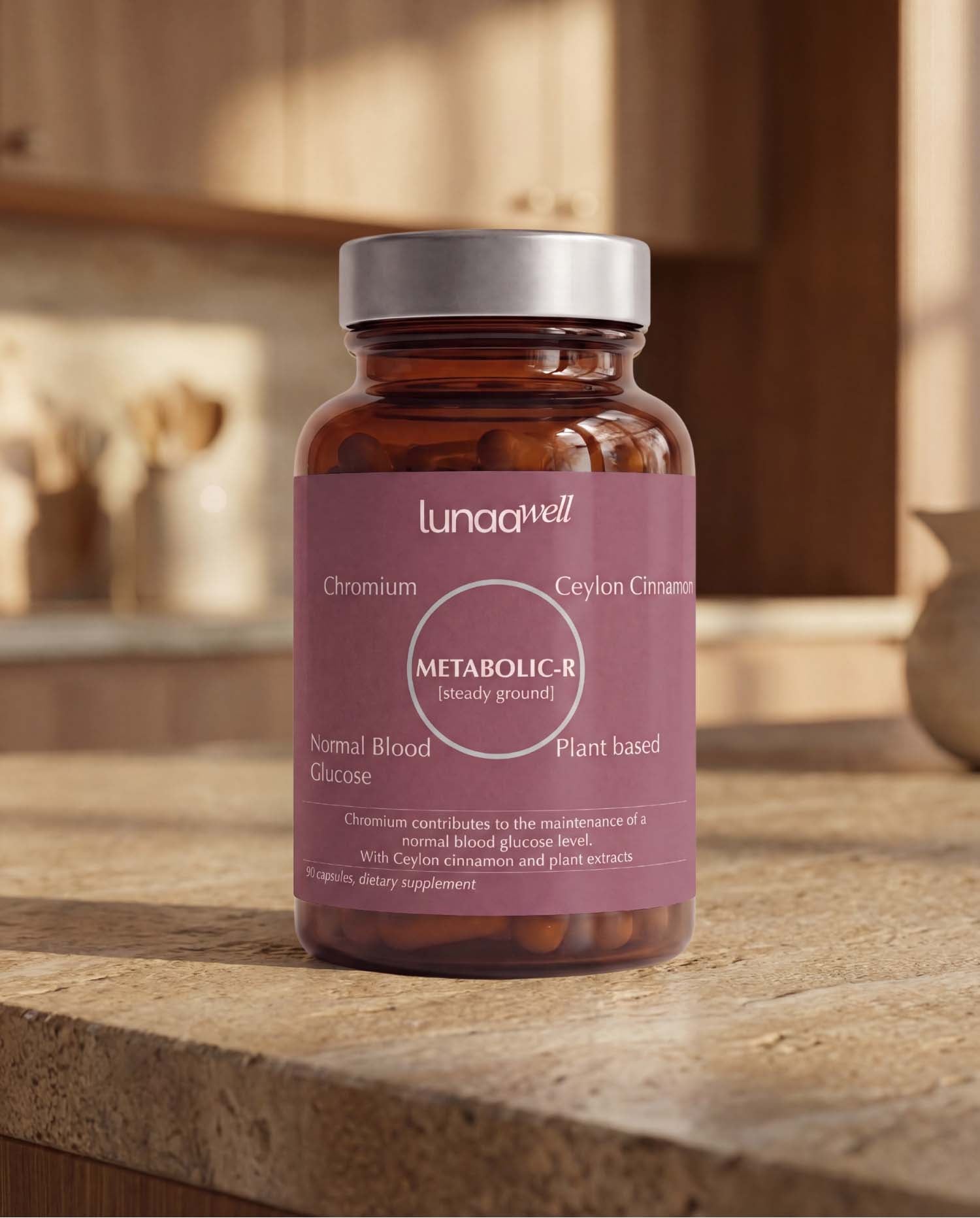
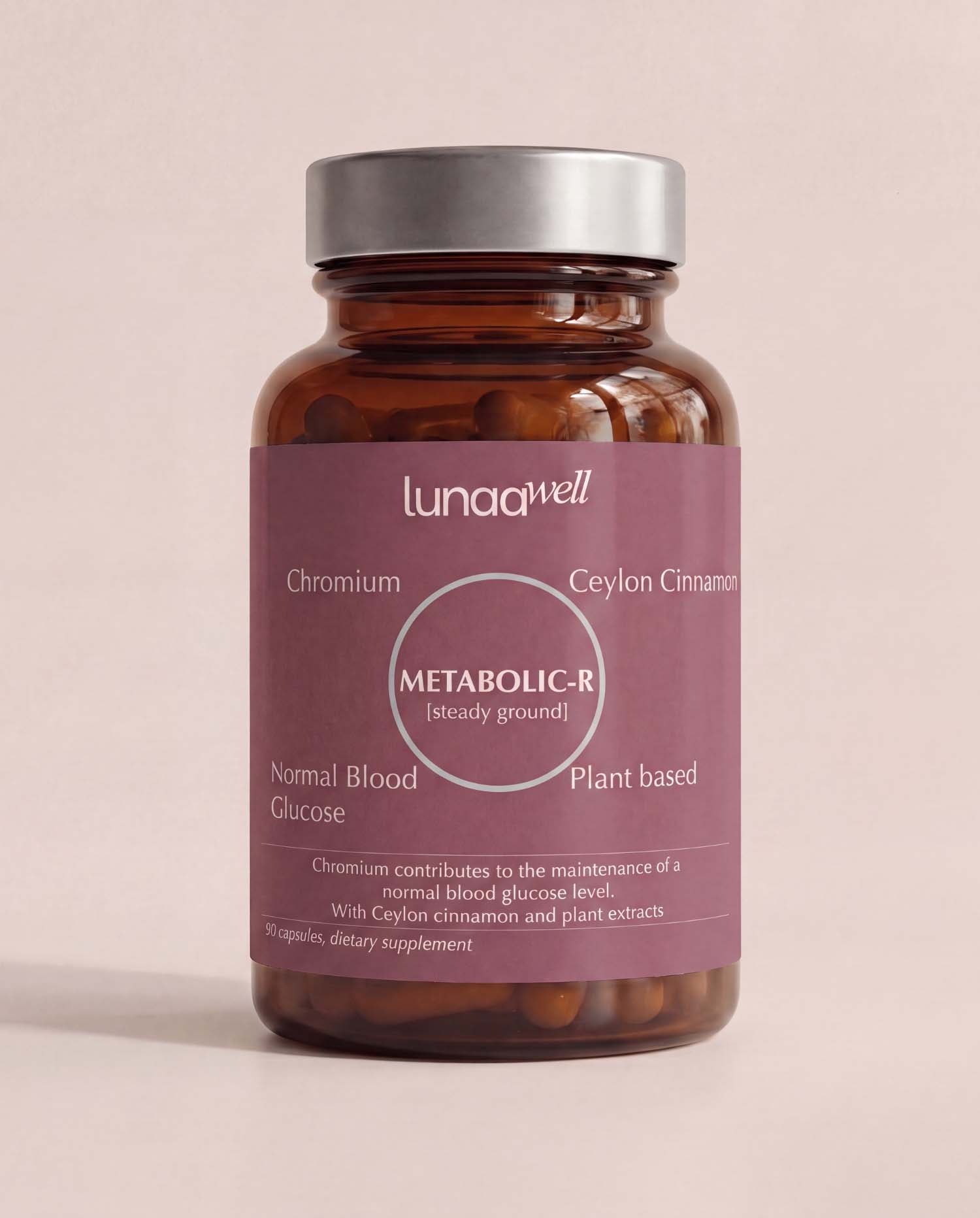
Cromul (în special sub formă de picolinat) sensibilizează receptorii de insulină, ceea ce permite GLP-1-ului produs natural să funcționeze mai eficient. Metabolic-R Glucose combină crom picolinat cu sinergici metabolici exact pentru această fereastră.
5. Acizi grași omega-3 — combustibil pentru receptori
EPA și DHA din peștele gras (somon sălbatic, sardine, hering) și uleiul de algă cresc atât producția, cât și sensibilitatea la GLP-1. În plus, omega-3 reduc inflamația cronică de joasă intensitate care interferează cu semnalizarea hormonală.
Țintă: 2-3 porții de pește gras pe săptămână sau 1-2g EPA+DHA zilnic dintr-un supliment de calitate.
De ce dispare „food noise" când balansezi glicemic
„Food noise" — gândul obsesiv la mâncare, planificarea constantă a următoarei mese, foamea care apare la 2 ore după ce ai mâncat — nu e o slăbiciune de caracter. E o consecință directă a glicemiei pe roller-coaster.
Când glicemia urcă brusc (după un croissant, o cafea cu zahăr, un sandwich pe pâine albă), pancreasul răspunde cu un val de insulină care prăbușește glicemia sub nivelul inițial. Creierul interpretează căderea ca pe o urgență metabolică și declanșează foame, chiar dacă tocmai ai mâncat 600 de calorii.
GLP-1 — natural sau sintetic — întrerupe acest ciclu, pentru că aplatizează curba glicemică. Mesele cu proteină + fibre + grăsimi sănătoase fac același lucru, gratis. După 2-3 săptămâni de glicemie stabilă, „food noise" se reduce dramatic. Nu mai e voință — e biochimie reașezată.
Protocol 14 zile pentru a-ți recalibra GLP-1 natural
Dacă vrei să testezi efectul fără să schimbi totul deodată:
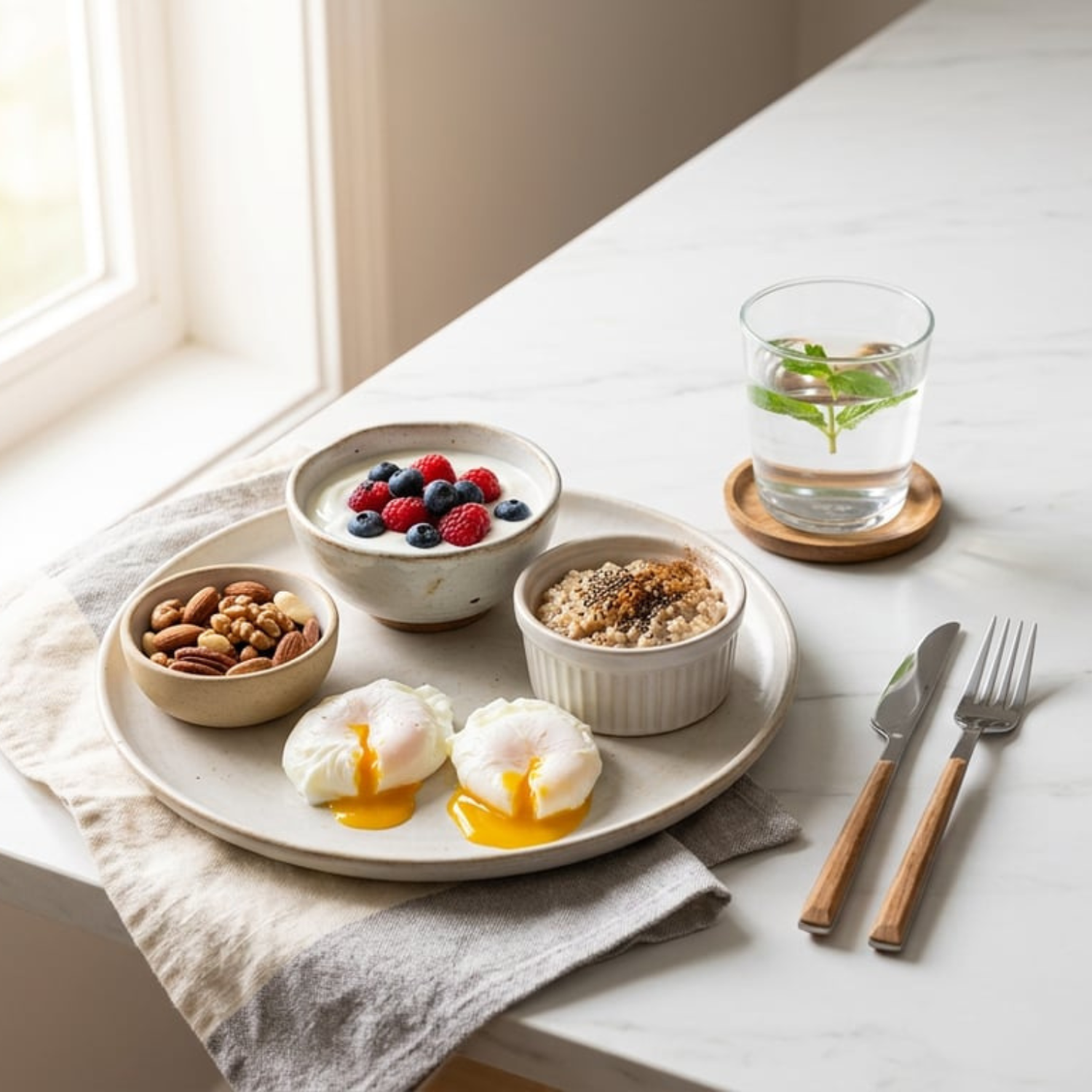
- Mic dejun: 25-30g proteină în primele 60 minute după trezire (omletă cu 3 ouă + spanac, sau shake cu Plant Protein + semințe chia)
- Înainte de mese: o lingură de oțet de mere în apă (sensibilizează receptorii GLP-1)
- După cină: 10-15 minute de mers (crește GLP-1 post-prandial cu până la 30%)
- Supliment: Metabolic-R Glucose + Plant Protein, conform indicațiilor
- Eliminare temporară: alcool, îndulcitori artificiali, alimente ultraprocesate (toate suprimă GLP-1)
Ce să observi: foamea dintre mese, claritatea mentală la 3 după-amiaza, calitatea somnului, dimensiunea porțiilor pe care le simți satisfăcătoare.
Întrebări frecvente despre GLP-1 natural
GLP-1 natural funcționează la fel de bine ca Ozempic?
Nu — agoniștii sintetici amplifică semnalul de 20-50x față de nivelurile naturale. Dar GLP-1 natural nu are efectele adverse: nu cauzează greață, gastropareză sau pierdere de masă musculară. Pentru femeile fără diabet sau obezitate severă, abordarea naturală oferă 60-70% din beneficii (sațietate, balans glicemic, pierdere graduală de greutate) cu 0% din riscuri.
Pot lua berberină dacă iau metformin sau alte medicamente pentru glicemie?
NU fără consultarea medicului. Berberina potențează efectul metforminului și poate cauza hipoglicemie. Întotdeauna întreabă-ți medicul înainte de a combina suplimente cu medicamente metabolice.
În cât timp se văd rezultatele?
Sațietatea și „food noise"-ul se ameliorează în 2-3 săptămâni. Pierderea de greutate (dacă e obiectivul) e graduală: 0.3-0.5 kg/săptămână este sustenabilă. Sensibilitatea la insulină se îmbunătățește semnificativ în 8-12 săptămâni.
E sigur să iei mai multe suplimente metabolice simultan?
În general da, dacă sunt formulate sinergic și nu duplică ingredientele. Stack-ul tipic Lunaawell — Plant Protein + Metabolic-R Glucose — este proiectat pentru a lucra împreună. Dacă iei și produse din alte branduri, verifică cu un nutriționist.
Concluzia care contează
Ozempic și frații lui sunt instrumente medicale legitime pentru diabet de tip 2 și obezitate severă. Nu sunt soluții pentru ultimele 5 kilograme sau pentru oboseala metabolică a perimenopauzei. Pentru cele mai multe femei după 35, redescoperirea producției naturale de GLP-1 — prin proteină consistentă, fibre fermentabile, polifenoli, omega-3 și suport metabolic țintit — produce o transformare mai lentă, dar mai sustenabilă, fără dependență de injecții și fără efectele adverse cumulative.
Corpul tău nu e defect. Are nevoie doar de combustibilul potrivit pentru a-și aminti cum să se regleze singur.
Notă: Acest articol are scop educațional și nu înlocuiește consultul medical. Înainte de a începe orice protocol nou de suplimentare sau dietă, mai ales dacă urmezi tratament medicamentos sau ai o afecțiune diagnosticată, consultă medicul tău.
Ți s-a părut util? Distribuie-l mai departe.
Distribuie pe InstagramCitește mai mult
Ghid complet despre rezistența la insulină: cauze, simptome, indicele HOMA, alimente, suplimente cu studii și protocol concret pentru femei după 35.

Perimenopauza schimbă metabolismul după 35. Ghid complet: de ce crești în greutate, cei 5 piloni ai resetului metabolic și protocol 28 zile pentru femei.