

Perimenopause and Weight Gain After 40: How to Reset Your Metabolism
You're eating exactly what you ate three years ago. You're sleeping the same, moving the same, waking up just as early. And yet the number on the scale has climbed by 4 kilograms in 18 months, your waistline has thickened, and your energy has disappeared somewhere around 3 in the afternoon. You're not imagining it. It isn't willpower. It's perimenopause — and it starts 10 years before you'll ever hear the word "menopause" from your doctor.
What perimenopause is and why metabolism changes
Perimenopause is the hormonal transition period that precedes menopause, typically beginning between 35 and 45 and lasting 4 to 10 years. Unlike menopause (defined as 12 consecutive months without a period), perimenopause is chaotic by definition: estrogen, progesterone, and testosterone levels swing unpredictably, sometimes day to day.
This hormonal instability triggers four fundamental metabolic shifts:
- Insulin sensitivity drops by 25-30% — cells respond more slowly to insulin, so the same breakfast produces a larger blood glucose spike and more fat storage, especially around the abdomen.
- Muscle mass begins to decline naturally (sarcopenia) — you lose an average of 1-2% of muscle mass per year after 35 if you don't actively defend it. Less muscle = lower basal metabolism.
- NAD+ production drops by 50% by age 50 — NAD+ is the coenzyme that allows mitochondria to produce energy from glucose and fats. Less NAD+ means chronic fatigue and sluggish energy production.
- Cortisol becomes chronically elevated — estrogen fluctuations disrupt the stress axis. Elevated cortisol promotes visceral fat storage and breaks down muscle.
The result? The same diet, the same calories, but a metabolism running in idle.
Why the diets that used to work don't anymore
If you've tried to lose weight after 40 using rules that worked in your 30s — cutting carbs, slashing calories, running 5 km a day — and seen slow or no results, there's a biological reason.
Aggressive calorie restriction backfires
In perimenopause, a sharp calorie cut (below 1500-1600 kcal for most women) triggers a hormonal stress response: cortisol rises, T3 (the active thyroid hormone) drops, and the body enters "conservation mode." You lose muscle before you lose fat, which further reduces basal metabolism. A study of women aged 40-55 showed that aggressive calorie restriction leads to muscle loss 2x greater than fat loss — the exact opposite of what you want.
Cardio alone is no longer enough
Running, brisk walking, or spinning burn calories but don't stop sarcopenia. After 40, you need a strength (resistance) stimulus to signal your muscles to stay. Without it, prolonged cardio can actually accelerate muscle loss through chronic cortisol.
"Between-meal" hunger isn't a lack of willpower
It's a direct consequence of insulin resistance. Blood glucose spikes sharply after meals with refined carbohydrates, insulin rises proportionally, then crashes glucose below the starting level. Your brain reads the drop as a metabolic emergency and demands food — even if you just ate.
The 5 pillars of metabolism in perimenopause
1. Protein — the non-negotiable pillar
In perimenopause, the ideal daily target is no longer 0.8g/kg (the standard recommendation for young sedentary adults), but 1.4-1.8g of protein per kg of body weight. For a woman weighing 65 kg, that's 90-115g of protein per day, distributed across 3-4 meals with a minimum of 25g per meal.
Why: protein defends muscle mass, stimulates natural GLP-1 production (the satiety hormone), and has the highest thermic effect — your body burns 25-30% of the calories in a portion of protein simply digesting it, compared to 5-10% for carbohydrates.
The hardest moment to hit the target is breakfast — women typically start the day with 8-12g of protein (coffee with milk + croissant or yogurt with fruit), when they need 25-30g to break the overnight catabolic cycle. Lunaawell's Plant Protein is formulated precisely for this window: 25g of complete protein per serving from pea, rice, and hemp, no artificial sweeteners, optimized for satiety and muscle recovery.
2. Strength training, 2-3 times per week
This is the highest-ROI intervention in perimenopause. Strength work (weights, resistance bands, bodyweight exercises) does three things cardio alone cannot:
- Builds muscle mass → higher basal metabolism 24/7
- Improves insulin sensitivity — trained muscles absorb glucose without insulin
- Increases bone density — essential as estrogen declines and osteoporosis risk rises
Start with 2 sessions of 30-40 minutes per week, focused on compound movements: squat, deadlift, push-up, row, overhead press. No gym required — a set of dumbbells and bands is enough.
3. Insulin sensitivity regulation
This is the intervention with the greatest impact on abdominal fat. Strategies with demonstrated impact:
- Protein + fiber before carbohydrates at every meal — flattens the glucose curve by up to 40%
- 10-15 minute walk after meals — reduces post-meal glucose by up to 30%
- Apple cider vinegar (one tablespoon in water before meals) — sensitizes insulin receptors
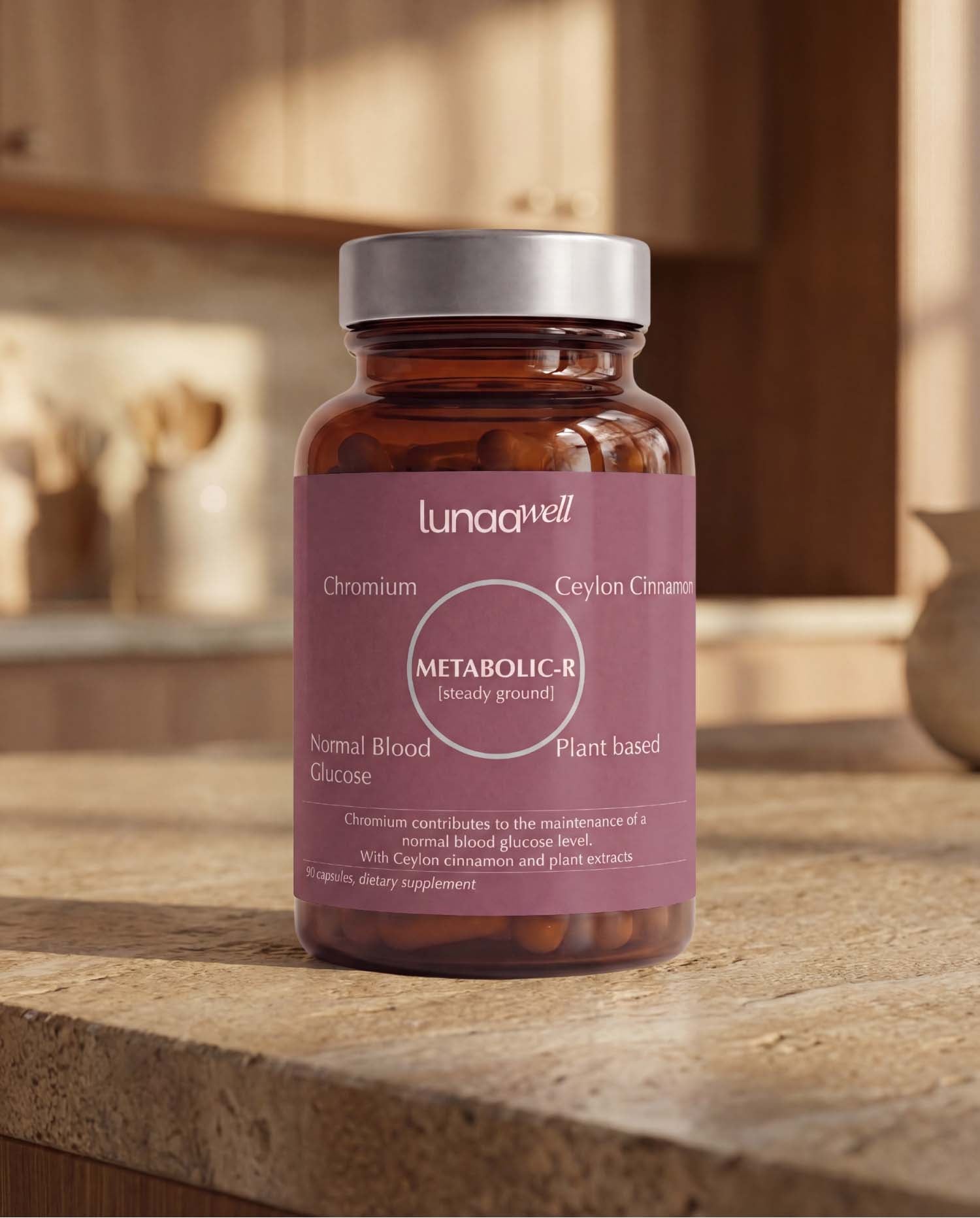
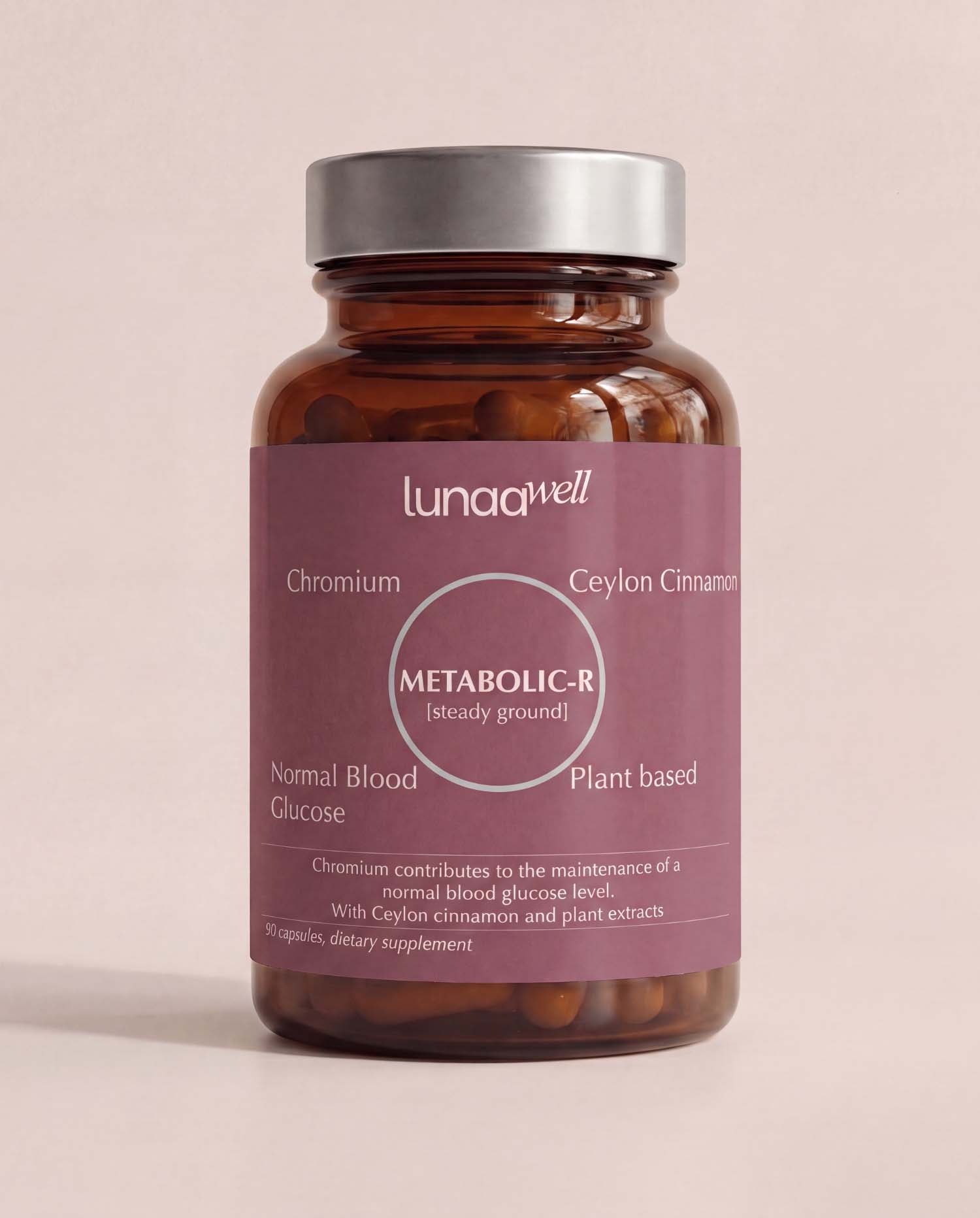
- Targeted supplements like chromium picolinate, which sensitizes cells to insulin. Metabolic-R Glucose combines chromium with metabolic synergists formulated for women in this life window.
4. NAD+ and mitochondrial energy
If you wake up tired even after 8 hours of sleep and hit a 3 p.m. crash that no longer lifts with coffee, the problem isn't sleep. It's cellular energy. Your mitochondria produce 30-50% less ATP at 45 than at 25, largely because of the drop in NAD+.
High-impact solutions:
- Moderate-intensity training (short HIIT 1-2x/week) stimulates mitochondrial biogenesis
- Light intermittent fasting (a 12-14 hour window between dinner and breakfast) activates autophagy and mitochondrial recovery
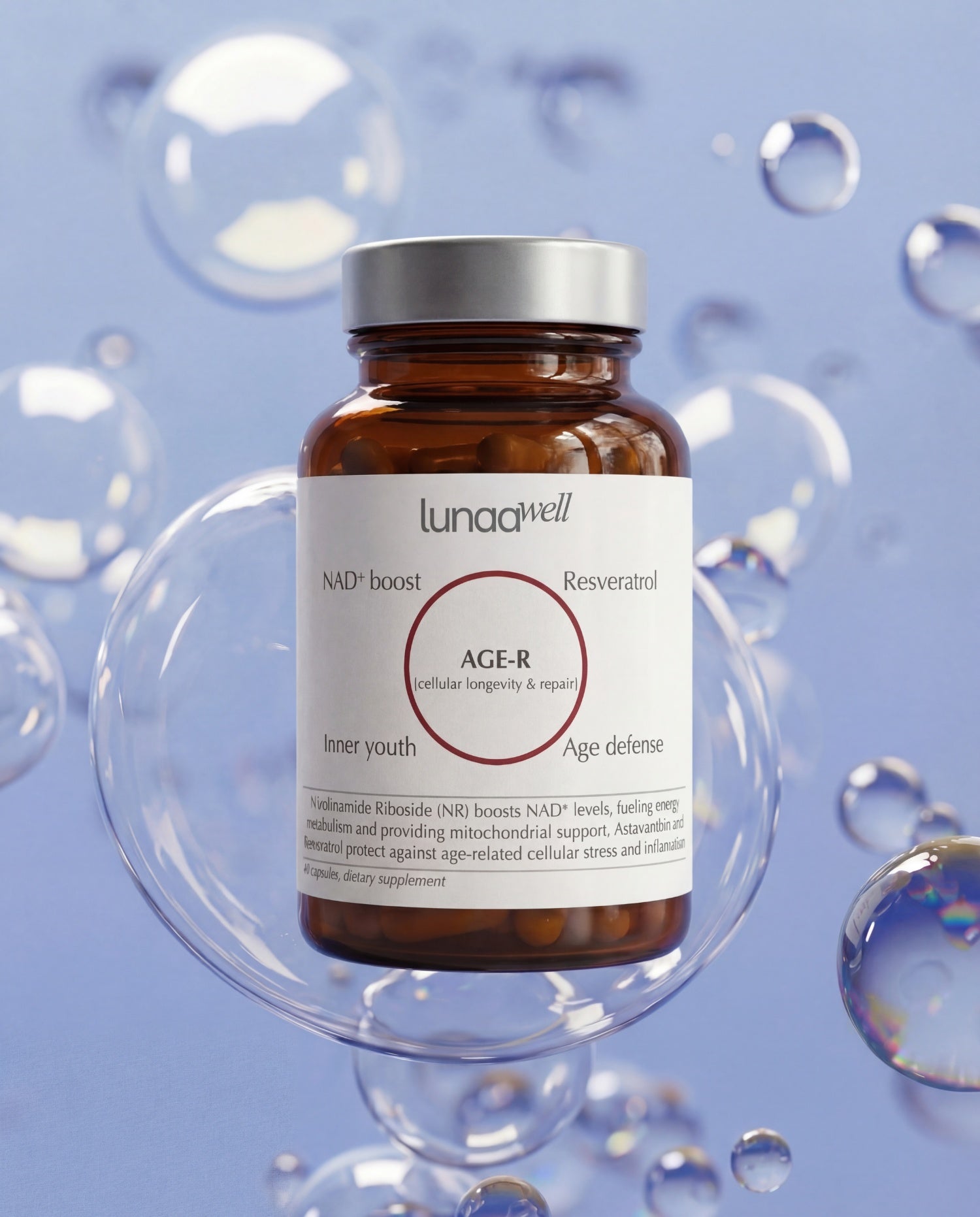
- NAD+ precursors like nicotinamide riboside (NR) or NMN. Age-R NAD+ Complex is formulated to support cellular energy production in this hormonal window.
5. Sleep and cortisol — the ignored pillar
In perimenopause, night sweats, anxiety, and 3 a.m. wake-ups aren't random — they're a direct result of hormonal fluctuations and dysregulated cortisol. Fragmented sleep reduces insulin sensitivity by 30% within 24 hours and raises cravings for refined carbohydrates by up to 45%.
High-impact strategies:
- Magnesium glycinate (200-400 mg) one hour before bed
- Close your eating window at least 3 hours before sleep
- Cool bedroom (18-19°C) — essential for night sweats
- Ashwagandha or L-theanine for evening cortisol
- Eliminate alcohol in the evening — even a single glass of wine reduces REM sleep quality by up to 40%
Which foods support metabolism in perimenopause
There's no universal "perimenopause diet," but there are patterns that work for nearly every woman:
- Complete protein at every meal: eggs, fatty fish, lean meat, legumes, combined plant proteins
- Moderate phytoestrogens: ground flaxseeds (1-2 tablespoons/day), fermented soy (tempeh, miso), chickpeas. They support estrogen balance without raising the risk of estrogen-dependent cancers.
- Fermentable soluble fiber: oats, psyllium, apples, legumes — feed the microbiome, which in turn regulates estrogen through the "estrobolome"
- Healthy fats: avocado, extra virgin olive oil, fatty fish (omega-3 EPA/DHA reduce hot flashes)
- Cruciferous daily: broccoli, cabbage, kale, cauliflower — contain DIM and sulforaphane, which support estrogen detoxification
What to avoid or sharply reduce:
- Alcohol (suppresses estrogen, disrupts sleep, lowers testosterone)
- Refined sugar and processed carbohydrates (amplify insulin resistance)
- Industrial vegetable oils (industrial soy and sunflower — pro-inflammatory)
- Coffee after noon (caffeine's half-life lengthens in perimenopause)
How to recognize the early signs of perimenopause
Women under 45 are typically dismissed by doctors who see a present menstrual cycle and conclude it's "too early." But perimenopause can begin 10 years before your period disappears. Early signs include:
- Shorter menstrual cycles (24-26 days vs the previous 28-30) or longer/irregular ones
- More pronounced PMS — irritability, breast tenderness, bloating
- Spontaneous waking between 3 and 5 a.m.
- Unexplained weight gain, especially around the abdomen
- "Brain fog" — words that won't come, losing your train of thought mid-sentence
- New or worsening anxiety with no clear trigger
- Lower alcohol tolerance — one glass hits like three
- Mild hot flashes or intermittent night sweats
- Hair becomes drier, skin less elastic
- Libido drops with no relational cause
If you tick 3+ of these symptoms and are over 35, you're most likely in perimenopause — even if you're still menstruating regularly.
A 28-day protocol for metabolic reset in perimenopause
If you don't know where to start, here is a 4-week framework that prioritizes the highest-ROI interventions:
Week 1 — Stabilization:
- Breakfast with 25-30g of protein within the first 60 minutes of waking
- Eating windows of 8-12 hours (e.g., 8 a.m. - 8 p.m.); dinner at least 3 hours before sleep
- 10-15 min walk after lunch and dinner
- Eliminate alcohol and refined sugar
Week 2 — Strength:
- Add 2 strength sessions of 30 minutes (compound movements with weights or bands)
- Increase protein to 1.6g/kg/day
- Magnesium glycinate 300 mg before bed
Week 3 — Insulin reset:
- Apple cider vinegar before meals
- Protein + fiber before carbohydrates at every meal
- Add chromium picolinate or the Metabolic-R Glucose formula
Week 4 — Cellular energy:
- 1-2 short HIIT sessions (15-20 min)
- Extend the evening fast to 13-14 hours
- Add an NAD+ precursor (Age-R) for mitochondrial support
For women who prefer a fully guided framework, Lunaa Reset is a structured 28-day protocol that integrates exactly these principles — nutrition, movement, supplementation, and mindset — into one guided experience.
Frequently asked questions about perimenopause and weight
Can I lose weight in perimenopause without hormone therapy?
Yes, absolutely — and for most women, lifestyle interventions (protein, strength, insulin sensitization, sleep) produce significant results in 8-12 weeks. Hormone therapy (HRT) can be a complementary option for severe hot flashes, chronic insomnia, or rapid bone loss, but it isn't a prerequisite for recalibrating your metabolism. Talk to a hormone-literate gynecologist if symptoms are affecting your quality of life.
How long until I see results?
Energy and sleep quality improve within 2-3 weeks. Insulin sensitivity and inflammation — within 6-8 weeks. Body composition (increased muscle mass, reduced abdominal fat) — 12-16 weeks for visible changes, but the metabolic shift begins the moment you start.
Do I have to cut carbs completely?
No. In perimenopause, complex carbohydrates (sweet potato, oats, legumes, whole fruit) are beneficial — they support thyroid function and healthy cortisol levels. What you need to eliminate are refined carbohydrates (white bread, pasta, biscuits, sweets) and you should always eat complex carbohydrates after protein and fiber.
Why does the belly thicken in perimenopause, even in slim women?
Lower estrogen redirects fat storage from the hips and thighs (female pattern) to the abdomen (male pattern), including as visceral fat — around the organs. This is the metabolically active type of fat, which drives inflammation and worsens insulin resistance. The strategies above (strength + insulin sensitization + cortisol reduction) are the most effective ways to reduce it.
Are supplements necessary or can I do everything through food?
Food and movement are the foundation, but in perimenopause certain nutrients (magnesium, omega-3, vitamin D, chromium, NAD+ precursors) are hard to hit through diet alone, especially as digestive absorption declines alongside estrogen. Targeted supplements are accelerators, not replacements — but they often make the difference between slow results and visible ones.
The bottom line
Perimenopause isn't a phase you simply "wait out." It's a window of metabolic opportunity: the decisions you make between 35 and 50 determine how you'll look, feel, and function between 50 and 80. Women who defend their muscle mass, regulate their insulin sensitivity, and support cellular energy in this window have significantly better longevity and quality-of-life scores than those who "endure" until menopause.
Your body isn't betraying you — it's asking for a different manual. The one you used at 30 was about growth and performance; the one you need now is about strategic conservation and biochemical optimization. Both work. The first one got you here. The second one will carry you forward.
Note: This article is for educational purposes and does not replace medical advice. Perimenopause symptoms can overlap with other conditions (thyroid, anemia, nutritional deficiencies). Before starting any new protocol, especially if you're on medication or have a diagnosed condition, consult your doctor.
Found this helpful? Share with someone who needs it.
Share on InstagramRead more

Your body already produces the hormone Ozempic mimics. How to stimulate GLP-1 naturally through protein, fiber, polyphenols, and targeted supplements — no injections, no side effects.

Chronic cortisol in women: 7 signs, the connection with abdominal fat, and the AM-PM protocol with magnesium, holy basil, and lifestyle rituals for reset.